The particular animal
A veterinarian for the dog at home
A paper supplies a group description. A treatment decision concerns an animal with a condition, a history and veterinary care.
The route to medicine
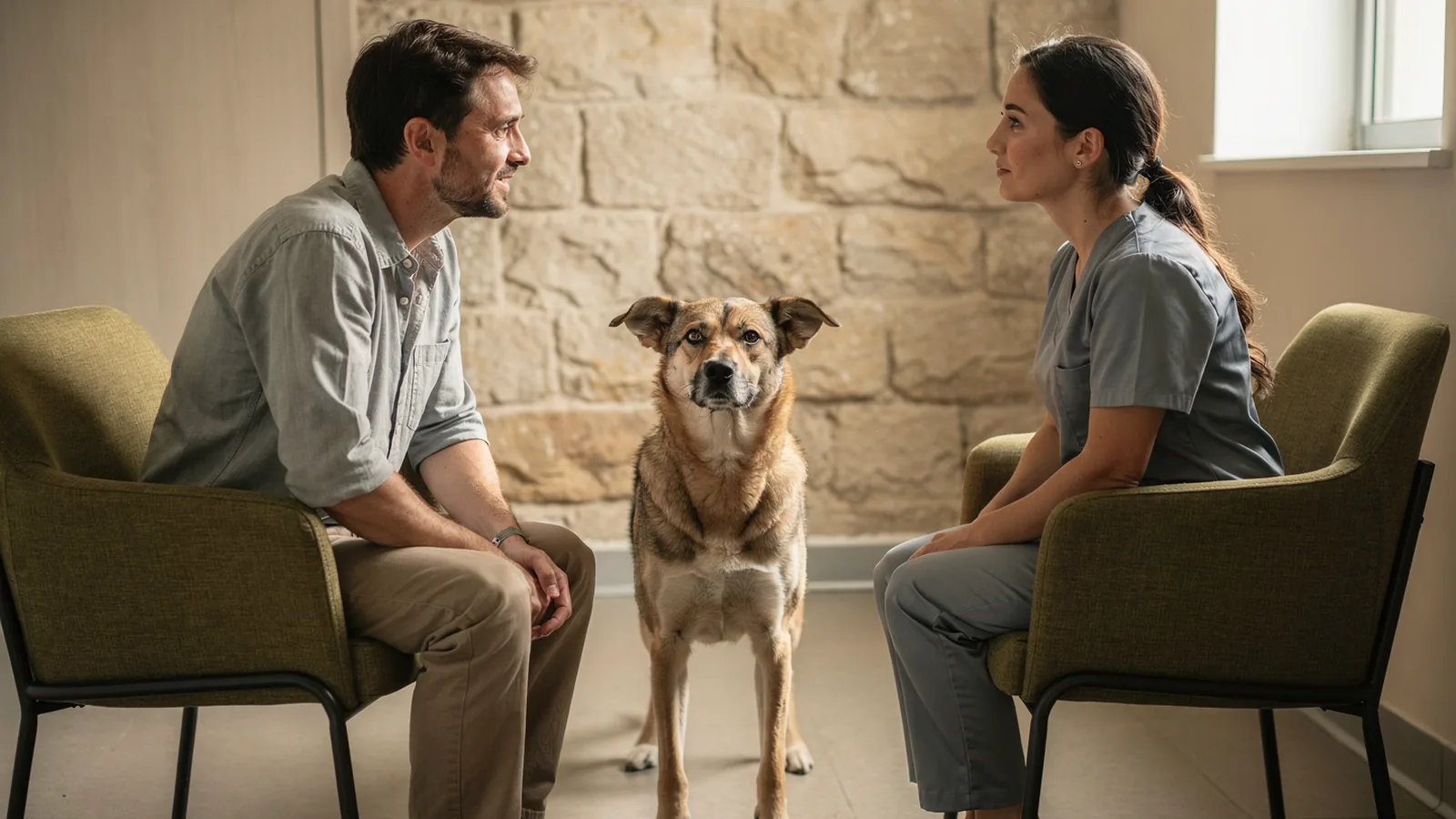
The route to any medicine for a pet is a veterinarian. In the United States, extra-label use allows an approved human or animal drug to be used outside its label under specified conditions. The federal rule includes a valid veterinarian-client-patient relationship and a threat to the animal's health. It describes a veterinarian who has recently seen the animal and knows its keeping and care.
I regard that familiarity with the animal as essential context. A dog described in a paper cannot stand in for an examination of the dog at home. The rule covers approved drugs; it does not convert an unapproved peptide into a legal pet medicine. Compounding from raw ingredients has a separate framework, beyond the extra-label provision discussed here.
Testing in the target species
The FDA's description of animal-drug development says a sponsor typically conducts a target-animal safety study in healthy animals of the species concerned. It looks for harmful effects and a safety margin. FDA approval concerns a specific use in a specific species.
The BPC-157 safety evaluation and blood-level study were laboratory development work for a human wound drug, described in more depth on the beagle page. I would distinguish that experimental purpose from an animal-drug development programme intended to establish a medicine for dogs. The shared presence of healthy dogs does not make the programmes interchangeable.
When a problem is reported
FDA explains that unapproved animal drugs have not undergone its safety and effectiveness review. They may also be improperly manufactured or labelled. Their makers are not required to report adverse drug experiences and product defects to FDA, which can delay recognition of problems.
An owner can still report a suspected animal-drug problem. FDA accepts reports about approved and unapproved animal drugs, including compounded preparations. Its reporting guidance gives a route for owners as well as veterinarians, and FDA encourages owners to work with their veterinarian.
I distrust that reassuring silence because the reporting system has gaps. A gap in reports cannot establish safety. Care for an unwell dog comes through a veterinarian; this site's contact address is for corrections to the pages.