BPC-157
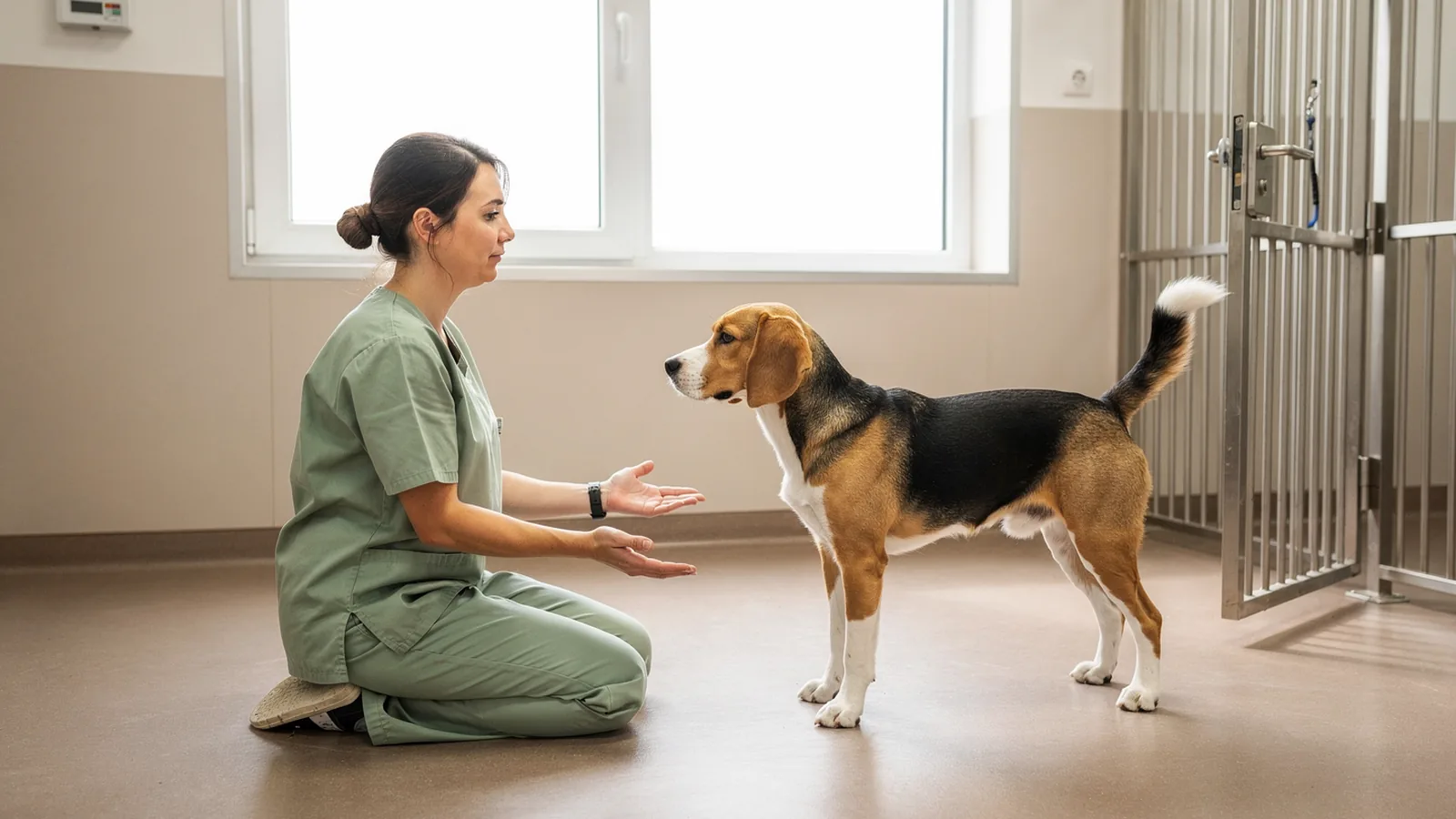
Laboratory beagles
A dog can appear in a paper because investigators are developing a medicine for people. That purpose changes the significance of the canine result.
Why these beagles were enrolled
The preclinical safety evaluation and the blood-level study in rats and beagles are the dog work identified for BPC-157. The animals were healthy laboratory beagles. The development programme concerned a potential human wound drug.
I had read the word dog as a stronger reassurance than the experimental purpose justified. Once the experimental purpose came into focus, the useful question narrowed: what did the investigators learn from healthy animals under controlled conditions? Neither paper tested treatment of a pet dog's injured joint, wound or other illness.
The safety work used study-grade peptide made by the researchers, and came from one research group. The dogs' tolerance of that preparation cannot settle the safety of a different preparation given to a sick pet.
The rat and beagle measurements
The blood-level paper reported that approximately 14%–19% of BPC-157 reached the bloodstream after a muscle injection in rats, compared with 45%–51% in beagles. The term for that share is bioavailability. The reported half-life was under 30 minutes in both species.
I value this comparison because the animals did not handle the compound identically. The measurements describe laboratory rats and beagles; they offer no calculation for treating a pet. The percentages are evidence about the compound's behaviour in that experiment.
A treatment trial in pet dogs
A PubMed search recorded on September 30, 2026 found no BPC-157 study treating illness or injury in pet dogs or cats. The development review likewise listed no veterinary clinical data. A search can miss papers, so this is a dated finding about the search and review rather than a claim to have ruled out every possible study.
Does a defined preparation help dogs with a defined illness or injury, with harms measured alongside benefits? Healthy-beagle work can contribute background. The treatment question remains open in the sources here.
The glucagon report supplies a useful comparison: dogs with a real illness receiving hospital treatment, although in a study with limitations of its own.