Liraglutide
Seven senior Goldens
The appetite finding is easier to state than the weight finding. I think that difference deserves room.
Golden Retrievers enrolled
The 2025 study by Dik and colleagues enrolled 21 senior Golden Retrievers in three groups of seven. The liraglutide group consisted of seven overweight dogs, followed for 40 days. One breed, older animals, a small group and a short observation period: those are the boundaries around the result.
The title calls liraglutide a novel therapeutic for overweight in canines. Senior Goldens tell me more here than the broad word canines. These were senior Goldens. Extending the result to puppies would require evidence in puppies; the group described here cannot supply it.
Food intake and weight
The authors reported marked suppression of food intake, a lower body condition score and lower body weight by day 40. The weight reduction they reported was 13.27 %, and it did not reach statistical significance.
That percentage can dominate a retelling. The uncertainty deserves equal space: this small experiment could not establish the weight result statistically. Eating less is the clearer observation in the report. The veterinarian's judgment about the individual dog matters before celebrating an appetite change.
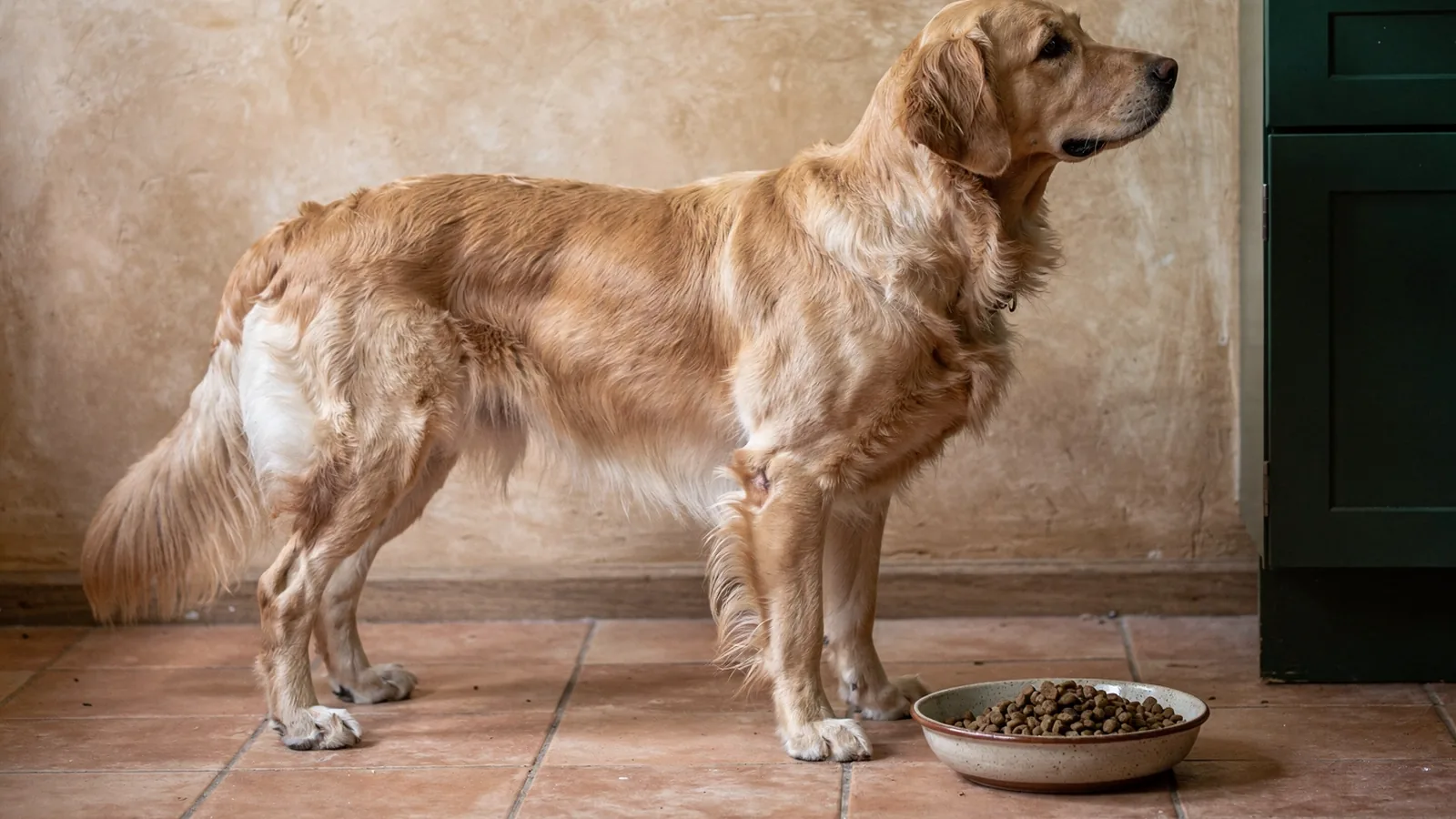
Following senior dogs for longer
The authors called for longer trials. That is the unfinished business for this group of older dogs: whether a result in a small group of older dogs persists when the observation lasts longer. This short, single-breed study does not establish that GLP-1 drugs are safe or effective for pet dogs.
The trial is interesting enough to earn further work. In any discussion of this result, the dogs' age, breed and starting condition deserve the same prominence as the compound's name. Those particulars make the finding useful to think about, and they show how much remains to be tested.
For a very different use of dogs in peptide research, turn to the healthy laboratory beagles.